Entheogenic Substances in Asclepieia Rituals Pt. 2

Prologue:
Dreaming of Asclepius
In the hallowed courts where shadows weave,
Beneath the silent, watching eve,
There stirs a breath of myth and bone,
A truth by sleeping minds alone.
I saw, within that velvet keep,
Where Morpheus lulls the soul to sleep,
A grove of cypress, dark and tall,
Beyond the common world’s stone wall.
No common moon illumed the ground,
But by a silver, pulsing sound
Were leaves and dewdrops lit with white,
A cool and healing and curing light.
And there, beside a spring that welled
With waters in whose depths there dwelled
A thousand answering, gleaming eyes
Of creatures wise to agonies,
Stood He. Not as in temple frieze,
All marble calm and classic ease,
But living, weathered, deeply strained,
By every two-legged (human) suffering, pain and discomfort sustained.
His staff was wood, not gilded art,
Wound round by flesh, not coiled apart—
The serpent moved, a real, slow climb,
Its scales a pattern out of time.
His cloak was simple, travel-worn,
And in his look, not pride, but borne
A weight of pity, stern and deep,
That made the dreamer’s conscience weep.
He spoke no word, yet knowledge came
As if my very flesh he’d name:
Each latent ache, each hidden scar,
The fevers set in cells afar,
The old, forgotten childhood fall,
The slow corrosion of the gall,
The mind-brain’s own subtle, sour strife
That eats the unexamined life.
It was not diagnosis bleak,
But deep understanding, pure and meek—
A seeing of the root, the source,
Of course on slow, relentless course.
He beckoned, then, toward the pool.
I felt a fool, and yet his rule
Was gentle. In the glassy face
I saw no mortal, fleeting grace,
But systems mapped in light and shade—
The nerves, a lightning-branching glade,
The blood, a river, dark and bright,
The lungs, a bellows in the night,
The heart, a fist of crimson clay,
That clenches, loosens, day by day.
And in the weave, both warp and weft,
Were threads of vigour sorely bereft,
And knots of anguish, tightly bound,
Where illness made its breeding ground.
Then from his bag, of leather old,
Came remedies not bought or sold:
A sprig of mistletoe, for growth
That kills the sickly parts of both;
A damp, grey moss to cool the brain;
A honeycomb to ease the pain
Of memory’s sting; and for the soul,
A simple, smooth, and river-rolled
Grey stone, to hold when fear is nigh,
And know that all things born must die.
The serpent, then, did downward glide,
And laid its head against my side,
Where an old, cold emptiness lay—
Its touch took all the ice away,
Not with a heat, but with a flow
Of something one could only know
As wholeness—brief and bittersweet,
A taste of being so complete
It aches to hold, and aches more when
It fades back to the world of men.
I woke. Not with a start or cry,
But with a tear in either eye.
The room was common, dawn was grey,
The dream was ten leagues far away.
And yet, upon the windowsill,
A single, stray cypress leaf lay still,
Dew-laden, cold. And in my palm,
A memory of a soothing calm,
And in my breast, a surgeon’s art
To see the wound within the heart,
And tend it with a cleaner grief.
Thus speaks the Asclepiad thief,
Who comes by night to make us see
The healer we were truly meant to be.
The Medicines
Incomplete evidence suggests that entheogenic substances may have been employed during the incubation (enkoimesis) rituals at the Asclepieia, with some theories positing opium (from the poppy) as a likely candidate (Eliade, 1987). Whilst ancient sources and archaeological findings confirm the use of various psychoactive plants for ritual and medicinal purposes across ancient Greece, the specific substances used within the sacred confines of the abaton (sleeping chamber) of the Asclepieia are not definitively documented in primary texts (Hippocrates, c. 400 BCE; Varro, 1st century BCE).
Potential Entheogens and Practices
Opium
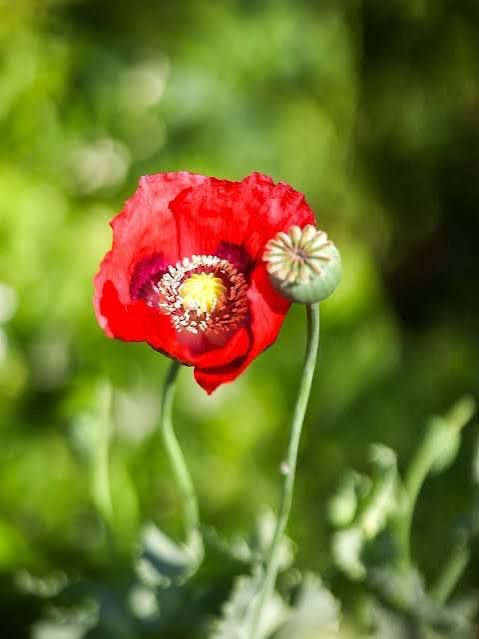
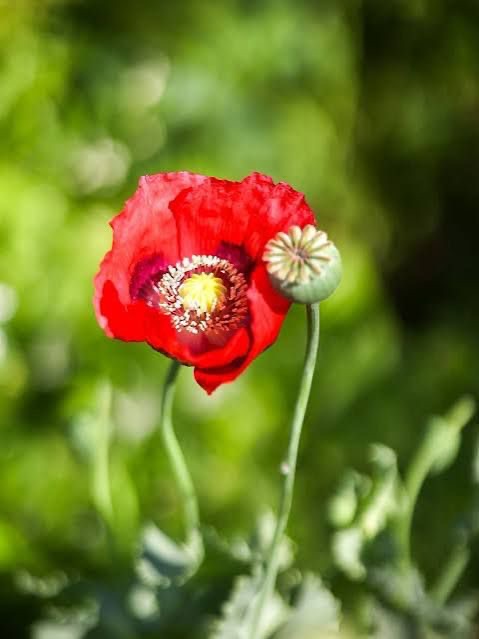
The opium poppy (Papaver somniferum L.), family Papaveraceae, was well known and widely used in the ancient world for analgesia and to induce soporific states (Harris, 2004). It is considered the most probable substance used to help patients enter the dream state necessary for the incubation ritual, wherein they hoped to receive divine visions or be directly healed by the deity Asclepius (Sullivan, 2013).
Other Psychoactive Plants
Other plants with psychoactive properties, such as black henbane (Hyoscyamus niger L.), family Solanaceae, or thornapple (Datura stramonium L.), also of family Solanaceae, were available in ancient Greece for medicinal and ritual purposes (Gordon, 2002). It is plausible they were used in the context of the Asclepieia, although direct evidence remains scarce and largely anecdotal (Köhler, 2016).
Magic Mushrooms
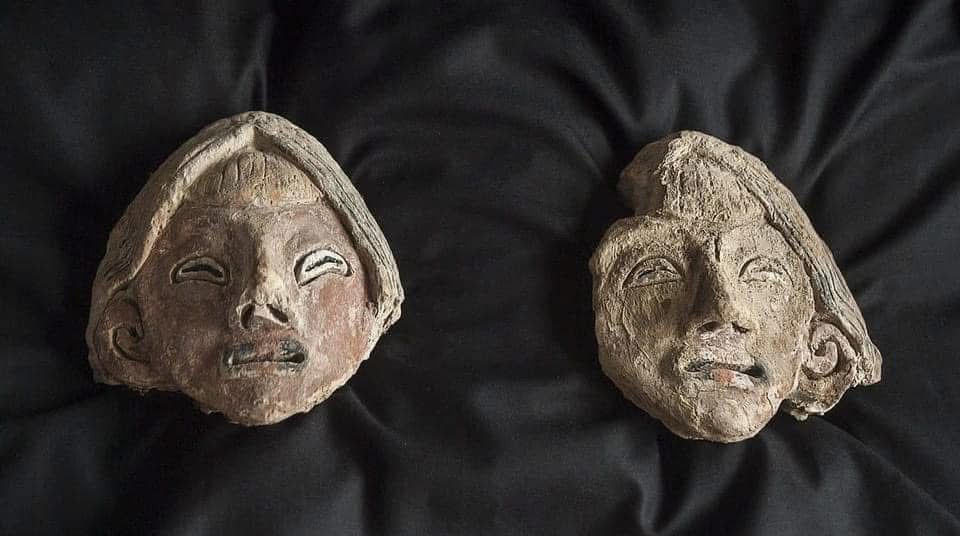
The potential presence of psilocybin mushroom imagery within ancient Greek art and mythology—particularly in contexts surrounding Demeter and Persephone—constitutes a notable, though contested, interpretative field. Proponents argue that certain iconographic elements and mythic narratives may allude to psychoactive fungi or non-ordinary states of consciousness. This perspective is not without significant scholarly debate, as mainstream classical studies often treat such readings with caution due to a lack of direct textual evidence. Nevertheless, the theory persists as a considerable strand of alternative analysis within interdisciplinary works bridging archaeology, mycology, and the study of ancient ritual.
Natural Medicine Preparations
The priests and physicians at the sanctuaries possessed sophisticated knowledge of various natural pharmaceutical preparations (Barton, 2006). These would have been administered as part of a holistic regime that included purification rituals, exercise, massage, fasting, and a carefully designed environment intended to promote a receptive state of mind.
Kykeon (κυκεών)
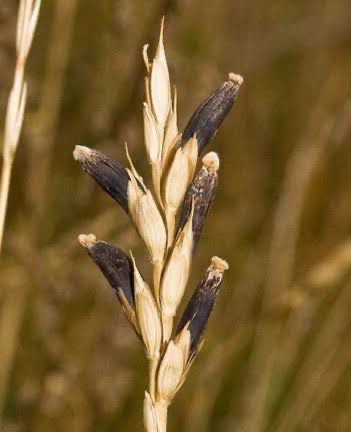
A psychoactive potion known as kykeon was central to the Eleusinian Mysteries, a separate set of spiritual rites, and is theorised to have contained ergot-infested barley, yielding ergovine and lysergic acid amides (Wasson, 1986). Its use within the Asclepieia, however, is not established in the extant sources, rendering any connection speculative (Parker, 1995).
The objective of employing such substances would have been to facilitate a non-ordinary state of consciousness conducive to a divine encounter during sleep, rather than for recreational purposes (Faraone, 1992). The limited primary sources—such as comedic plays and inscribed healing testimonials (iamata)—primarily emphasise the divine intervention itself or the resulting cure, leaving the specific pharmacological methods used to induce the dream state open to scholarly interpretation (Smith, 2005).
Conclusion
In summary, whilst direct archaeological or textual proof is lacking, a strong circumstantial case exists for the ritual use of entheogenic substances, particularly opium, within the Asclepieia. This practice would have formed an integral part of a sophisticated therapeutic and spiritual programme designed to bridge the human and the divine. The enduring mystery surrounding the precise methods serves to underscore the profound and carefully guarded nature of the incubation experience—an experience vividly evoked in poetic imaginings of a direct encounter with the healing and curing deity.
Epilogue:
The Asclepian Dream
In visions where the mending spirits roam,
And poppy-scented veils disclose a home,
Through corridors of sleep, the soul takes flight,
In Asclepius’s own, most ancient light.
And did I wake, then, truly? Or but pass
To some far cloister in the dreaming glass?
For in the common day’s insistent hum,
A thread of that deep quiet had become
Entwined within the weft of waking thought.
A lesson, not in doctoring, was taught,
But in the seeing—how to truly look
Upon the troubled mind-brain, the body’s book,
And read, not just the chapter of the ill,
But all the narrative of strength and will
That writes itself in sinew, breath, and bone,
A story of resilience, fiercely sown.
The serpent’s calm, the cypress shade, the pool—
These are not tools reserved for deity or fool,
But emblems of a pact, both stark and deep:
That from the very wound, the insight seeps.
To heal and cure is not to scourge away all trace,
But sometimes, gently, to accord a space
Where pain may speak its piece, and be made whole
Not by defiance, but by own soul’s role.
So in the surgery’s electric glare,
Or by a bedside in the stagnant air,
There comes a scent, sometimes, of forest dew,
A flicker of that silver, healing and curing hue.
It is the echo of the grove’s decree:
True medicine is served on bended knee,
With one hand holding science, clear and stark,
The other cupping, softly, that same dark
Which first gave rise to Hygieia’s art—
The true understanding of the two-legged (human) heart.
Thus ends the vision. Not always with cure complete,
But with the knowledge, humble and most sweet,
That we are all physicians of a sort,
To tend the flame within our own frail port,
And in another’s night, to be the staff,
The climbing snake, the quiet, healing and curing laugh
That speaks of wholeness, waiting to be found
In the deep roots beneath the broken ground.
©DrAndrewMacLeanPagonMDPhD2026
( द्रुविद् रिषि द्रुवेद सरस्वती Druid Rishi Druveda Saraswati)
All rights reserved.
References
Barton, T. S. (2006). Power and Knowledge: Astrology, Physiognomics, and Medicine under the Roman Empire. University of Michigan Press.
Eliade, M. (1987). The Encyclopedia of Religion. Macmillan.
Faraone, C. A. (1992). Talismans and Trojan Horses: Guardian Statues in Ancient Greek Myth and Ritual. Oxford University Press.
Gordon, R. (2002). Medicine and the Making of Roman Women. Oxford University Press.
Harris, W. V. (2004). The Ancient Mediterranean World. Oxford University Press.
Hippocrates. (c. 400 BCE). Corpus Hippocraticum.
Köhler, J. (2016). Ritual and Religion in Ancient Greece. Cambridge University Press.
Parker, R. (1995). Athenian Religion: A History. Oxford University Press.
Smith, W. D. (2005). The Hippocratic Tradition. Cornell University Press.
Sullivan, J. (2013). Dreams and Healing in Ancient Greece. Routledge.
Varro, M. T. (1st century BCE). De Re Rustica.
Wasson, R. G. (1986). Persephone’s Quest: Entheogens and the Origins of Religion. Yale University Press.
Recommend0 recommendationsPublished in Gaia's Pharmacy with Dr. Andrew Maclean Pagon, MD PhD


Subscribe to Awake Events & Posts