The Asclepieia: Sacred Dream Healing and its Legacy in Western Medicine Pt 1

The Dreamer in the Portico
We arrived with bodies bent by ache,
And left our doubt beside the lake.
The archiereis (ἀρχιερεῖς) offered silence, cool and deep,
Then laid us down to holy sleep.
The serpent, wisdom’s gentle tongue,
On staff of wood was loosely hung.
It did not writhe, nor did it bind—
It whispered to the dreaming mind:
“What root can stir the flesh to mend?
What vision calls the soul to friend?
And in that dark, a light was born
Not from the stars, but from the thorn
Of mortal pain, transfigured there
By breath of Divine and temple air.
We rose at dawn, not fully healed,
But with a truth our hearts revealed:
That every cure must first begin
Where sacred sleep lets meaning in.
The Ritual and its Lexical Legacy
The ancient Greek and later Roman tradition of therapeutic dream incubation, centred on the sacred Asclepieia, represents a seminal and often underappreciated lineage within the history of Western medicine (Edelstein & Edelstein, 1945 CE.)
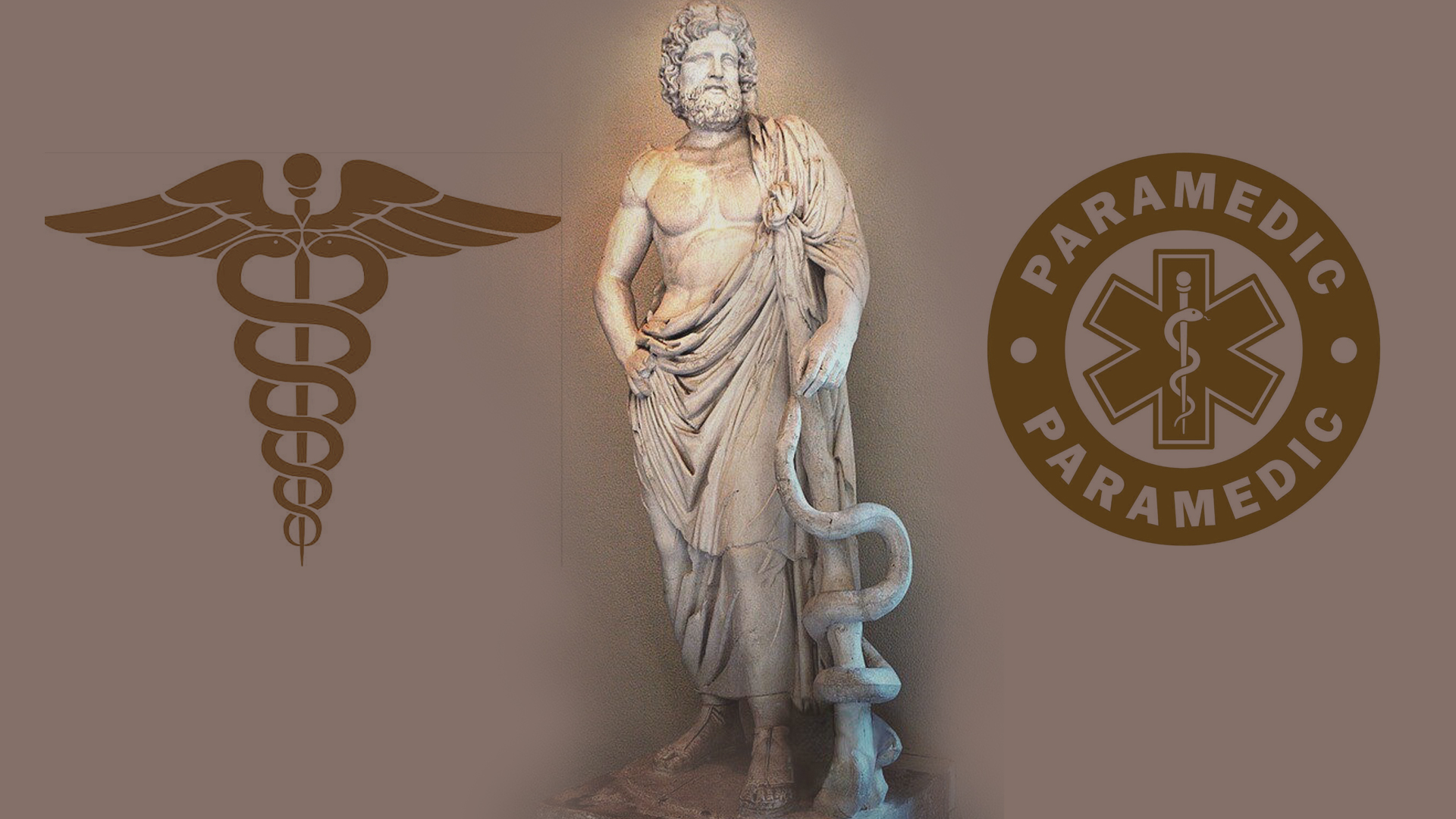
In this ritual practice, supplicants would sleep within the temple abaton (the forbidden, sacred dormitory), seeking diagnostic or curative dreams from the deity Asclepius or his divine attendants.
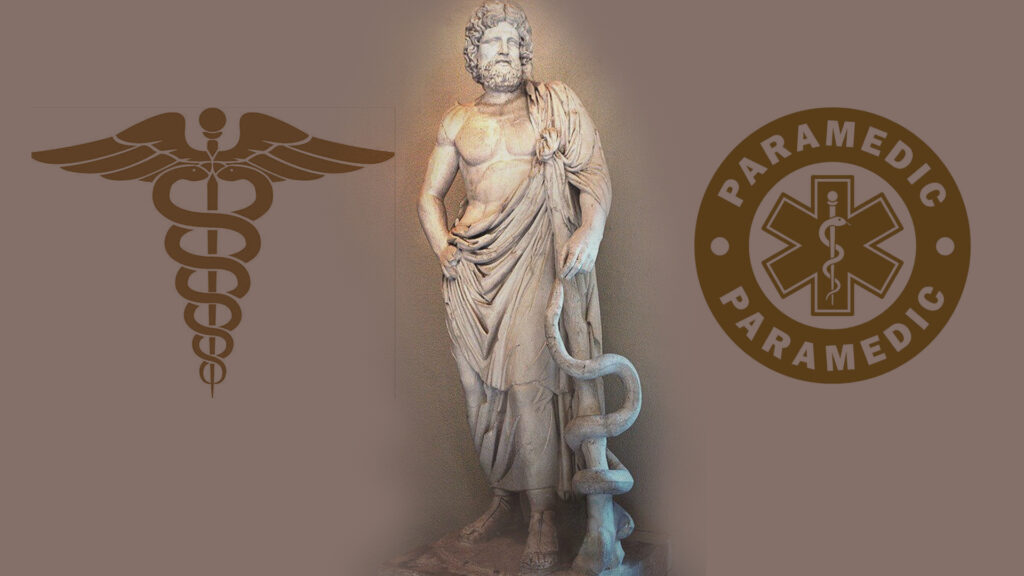
This tradition is the direct source of the enduring medical symbol, the serpent-entwined staff known as the Rod of Asclepius (Hart, 2000).
Furthermore, foundational medical terminology—including hygiene (from Hygieia, Asclepius’s daughter), therapy, clinic, and panacea—stems directly from this spiritual heritage, embedding the concept of sacred healing within the linguistic roots of the medical arts (von Staden, 1989).
The Hippocratic Divergence and the Two Streams
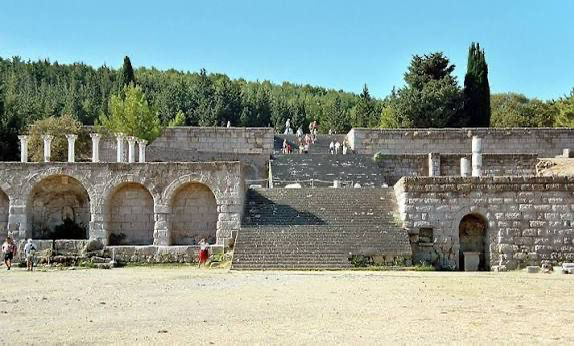
Significantly, Hippocrates of Kos (Ἱπποκράτης ὁ Κῷος, romanised: Hippokrátēs ho Kôios; c. 460 – c. 370 BCE), also known as Hippocrates II, widely honoured as the father of Western rational medicine and the namesake of the Hippocratic Oath—was, according to tradition, linked to the Asclepieion on Kos, and the very term therapeutēs (attendant) originated in this temple context (Jouanna, 1999).
His profound contribution, however, lay in systematically distinguishing the emerging discipline of naturalistic medicine from its spiritual forebears, as enshrined in the Hippocratic Corpus.
He championed a methodology based on direct observation, logical prognosis (prognōsis), and physical treatment, famously declaring, “Each disease has its own nature, and arises from external causes” (Hippocrates, On Ancient Medicine, 1).
Thus, from classical antiquity, two distinct streams emerged: the sacred, temple-based healing invoking non-ordinary states of consciousness, and the empirical, clinical tradition of physical practice (Lloyd, 2003).
Historical Continuity and Modern Resonance
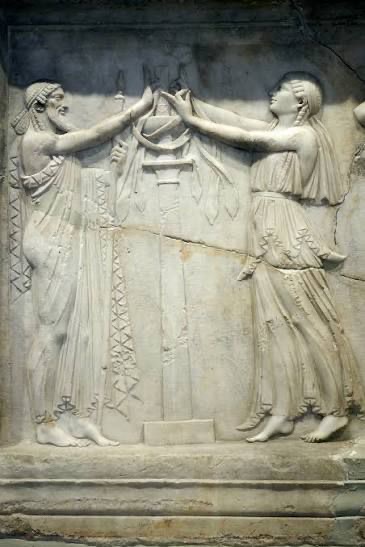
This complex heritage underscores a critical point: the pursuit of healing through intentionally non-ordinary states of consciousness possesses a deep and legitimate pedigree within Western culture (Kripal, 2017).
It is not a foreign import but an indigenous thread woven into its earliest medical traditions. Consequently, the ancient Asclepieion model provides profound historical resonance and a valuable framework for understanding the contemporary, evidence-based resurgence of such practices.
Modern entheogenic psychotherapy, with its structured set, setting, skill, harm reduction, and therapeutic integration, can be seen as a sophisticated echo of the incubation ritual, seeking to reintegrate non-ordinary states of consciousness into the therapeutic healing and potentially curing process (Rucker et al., 2018; Winkelman, 2021).
The Physician Remembers the Temple
I, who have learned to trace the fever’s course,
To read the pulse, and name the dark resource
Of tumour, fracture, malady of blood—
I sometimes hear, beneath my study’s hum,
An older voice, a softer cadence come.
It speaks of sleep that was not empty rest,
But where the mind, by deity possessed,
Would meet the serpent on a path of light
And see the shape of sickness take its flight.
My tools are steel, my texts are dense with proof,
Yet in the deep and solitary hour,
When logic feels the limit of its power,
I honour still that visionary root:
The wounded deity, the dream, the living shoot,
And know—all healing and cure hold a sacred truth.
DrAndrewMacLeanPagonMDPhD2026
( द्रुविद् रिषि द्रुवेद सरस्वती Druid Rishi Druveda Saraswati)
All rights reserved.
PS
Potential External Influences
While the development of the Asclepieia was fundamentally an internal phenomenon within Greek mythology and spiritual practice, some scholars have proposed possible external influences, although this remains a contested area. Notably, the central ritual of incubation (enkoimesis)—whereby supplicants slept within the sacred precinct to receive curative dreams—is cited by ancient sources such as Diodorus Siculus (Bibliotheca Historica, Book I, 25) as having antecedents in Egyptian practices associated with the cult of Isis. This suggests a potential cultural and spiritual diffusion of the ritual form.
Furthermore, the serpent, the paramount symbol of Asclepius and of medicine itself, invites comparative analysis. Scholars have observed its significant role in the iconography and lore of several Near Eastern traditions. Parallels have been drawn with the Egyptian serpent deity Cnuph, the Phoenician healing deity Eshmun, and the Mesopotamian-Sumerian Ningishzida, a deity sometimes depicted with serpents and associated with the underworld and regeneration (see, for example, Walter Burkert’s The Orientalizing Revolution: Near Eastern Influence on Greek Culture in the Early Archaic Age, Chapter III). This has led to hypotheses regarding a symbolic or conceptual exchange.
Conclusion and Synthesis
In the final analysis, while selective elements such as the incubation ritual or certain symbolic motifs may have been informed by older Eastern traditions, the core spiritual figure of Asclepius and the sophisticated institutional structure of the Asclepieia were distinctly Hellenic developments. They evolved organically from earlier Greek hero cults into a pan-Hellenic spiritual and therapeutic system, as detailed in Emma J. Edelstein and Ludwig Edelstein’s seminal work, Asclepius: A Collection and Interpretation of the Testimonies (Chapter 2, “The Development of the Cult”).
The synthesis was uniquely Greek, adapting any foreign influences into a coherent framework centred on the healer-deity’s mythos and the practice of temple medicine.
References
Burkert, W. (1992). The Orientalizing Revolution: Near Eastern Influence on Greek Culture in the Early Archaic Age. Harvard University Press.
Diodorus Siculus. Bibliotheca Historica. (Book I, 25).
Edelstein, E. J., & Edelstein, L. (1945). Asclepius: A Collection and Interpretation of the Testimonies. Johns Hopkins Press.
Hart, G. D. (2000). Asclepius: The God of Medicine. The Royal Society of Medicine Press.
Jouanna, J. (1999). Hippocrates. (M. B. DeBevoise, Trans.). Johns Hopkins University Press. (Original work published 1992).
Kripal, J. J. (2017). The Flip: Epiphanies of Mind and the Future of Knowledge. HarperCollins.
Lloyd, G. E. R. (2003). In the Grip of Disease: Studies in the Greek Imagination. Oxford University Press.
Rucker, J. J. H., Iliff, J., & Nutt, D. J. (2018). Psychiatry & the psychedelic drugs: Past, present & future. Neuropharmacology, 142, 200–218.
von Staden, H. (1989). Herophilus: The Art of Medicine in Early Alexandria. Cambridge University Press.
Winkelman, M. J. (2021). The Anthropology of Consciousness: Psychedelics and Their Applications. In K. H. J. (Ed.), Advances in Psychedelic Medicine (pp. 1–22). Praeger.
Hippocrates. (On Ancient Medicine). In W. H. S. Jones (Trans.), Hippocrates Volume I (Loeb Classical Library). Harvard University Press.
Recommend0 recommendationsPublished in Gaia's Pharmacy with Dr. Andrew Maclean Pagon, MD PhD


Subscribe to Awake Events & Posts