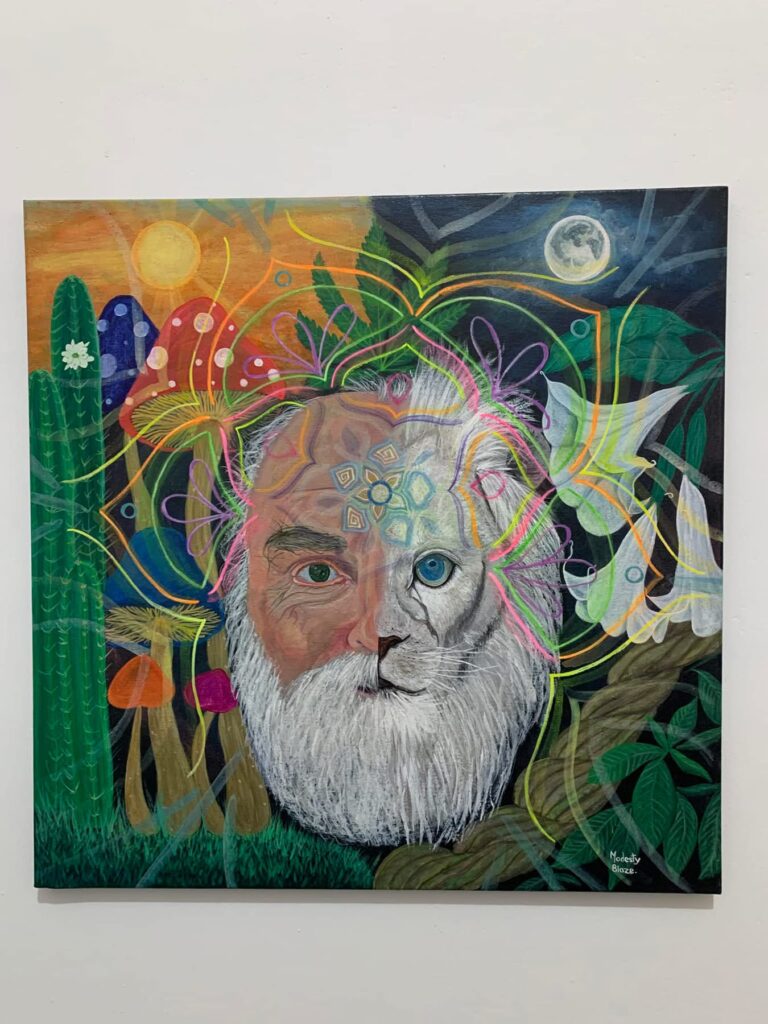
The Universe as Celestial Crucible: The Teleological Ascent to Divine Consciousness

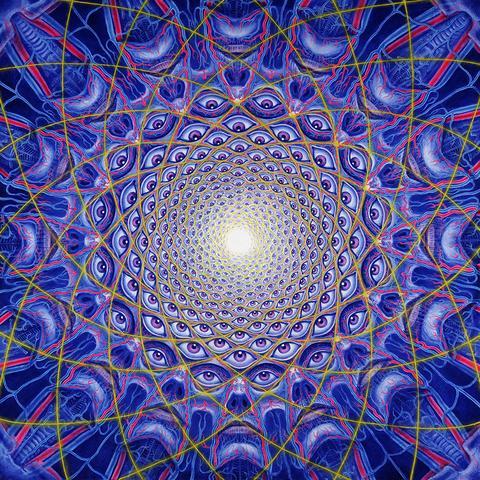
Philosophical and Teleological Foundations
The proposition that the infinite universe exists to guide sentient beings towards full divine consciousness engages deeply with teleological philosophy, which posits purpose or directedness in nature (Aristotle, Physics). This worldview resonates with metaphysical and spiritual systems asserting that the cosmos is imbued with intentionality regarding the evolution of awareness.
Theological Frameworks – Immanence and Transcendence
Theological concepts such as Pantheism, which identifies the divine with the universe itself (Spinoza, Ethics), and Panentheism, which holds the divine to be both within and beyond the cosmos (Whitehead, Process and Reality), support the view that universal processes express a divine unfolding. From these perspectives, the ascent of consciousness is the realisation of an inherent, sacred nature.
Cosmological Perspectives – The Anthropic Principle
In cosmological discourse, the Anthropic Principle observes that the universe’s fundamental constants appear ‘fine-tuned’ to permit the emergence of observers (Barrow & Tipler, The Anthropic Cosmological Principle). While scientifically descriptive, some interpretations suggest a cosmos predisposed to fostering reflective, sentient life, aligning with a purposeful narrative.
The Process of Spiritual Evolution
The notion of Spiritual Evolution—that existence aims for the progressive awakening of beings—is central to many traditions, from Teilhard de Chardin’s concept of the Omega Point (The Phenomenon of Man) to the Hindu understanding of moksha (liberation). This frames the universe as a developmental arena for consciousness.
States of Awareness – Cosmic Consciousness
The concept of Cosmic Consciousness, denoting a transcendent, unified awareness, has been explored by thinkers such as Richard Maurice Bucke (Cosmic Consciousness: A Study in the Evolution of the Human Mind). It represents a potential zenith of the sentient journey, a state of divine union the universe may be structured to reveal.
Contemporary Theories – Panpsychism and Fundamental Consciousness
Modern consciousness studies offer theories like Panpsychism, which proposes consciousness as a fundamental, ubiquitous property of reality (Goff, Galileo’s Error: Foundations for a New Science of Consciousness). This scientific-philosophical stance allows for a universe where the rise of higher sentience is an inherent, natural expression of its basic fabric.
Conclusion: The Unresolved Mystery
It remains critical to acknowledge that these synthesised ideas, while intellectually and spiritually compelling, are speculative and often reside at the intersection of empirical inquiry and metaphysical reflection. Conventional science typically refrains from attributing purpose to cosmic processes (Davies, The Mind of God). Ultimately, the questions of universal intent and the nature of consciousness persist as profound mysteries, stimulating rigorous dialogue across philosophy, theology, and science.
©DrAndrewMacLeanPagonMDPhD2026
( द्रुविद् रिषि द्रुवेद सरस्वती Druid Rishi Druveda Saraswati)
All rights reserved.
References
Aristotle. (c. 350 BCE). Physics.
Barrow, J. D., & Tipler, F. J. (1986). The Anthropic Cosmological Principle. Oxford University Press.
Bucke, R. M. (1901). Cosmic Consciousness: A Study in the Evolution of the Human Mind.
Davies, P. (1992). The Mind of God: The Scientific Basis for a Rational World. Simon & Schuster.
Goff, P. (2019). Galileo’s Error: Foundations for a New Science of Consciousness. Rider.
Spinoza, B. (1677). Ethics.
Teilhard de Chardin, P. (1955). The Phenomenon of Man. Harper & Row.
Whitehead, A. N. (1929). Process and Reality. Cambridge University Press.
Recommend0 recommendationsPublished in Gaia's Pharmacy with Dr. Andrew Maclean Pagon, MD PhD


Subscribe to Awake Events & Posts