Trauma as Medicine special guest Sarah Salter-Kelly, All About Ibogaine Jul 2

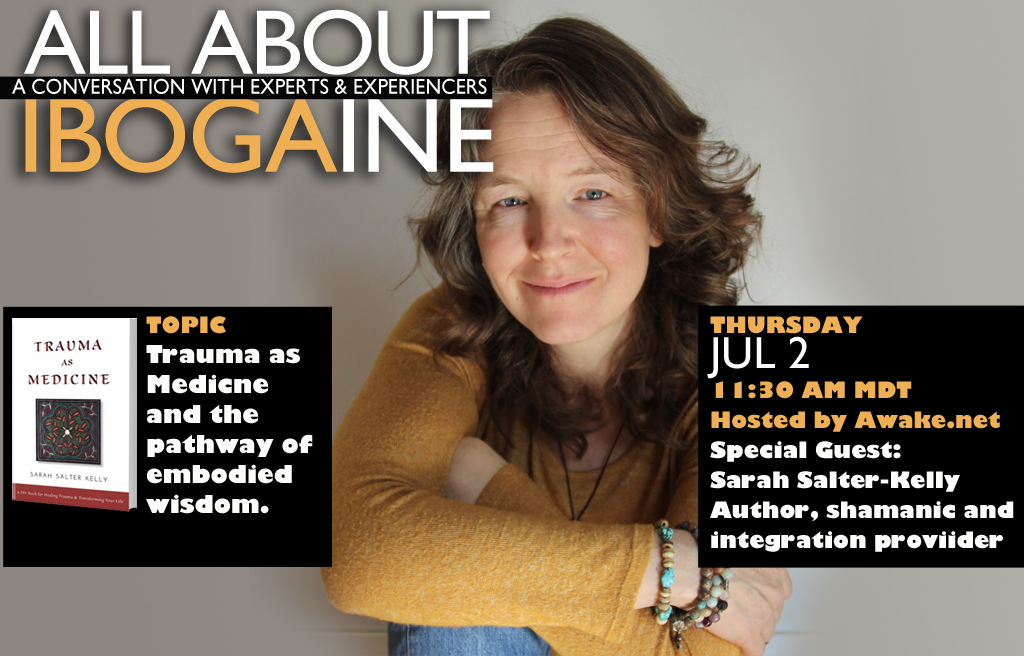
REPLAY of a conversation with author, shamanic medicine and integration expert Sarah Salter-Kelly about transforming trauma into medicine through sacred relationship with Self, Spirit and Mother Earth, and her own journey of embodied wisdom and where and how it originated.
https://youtube.com/live/FL27gLNPyxA
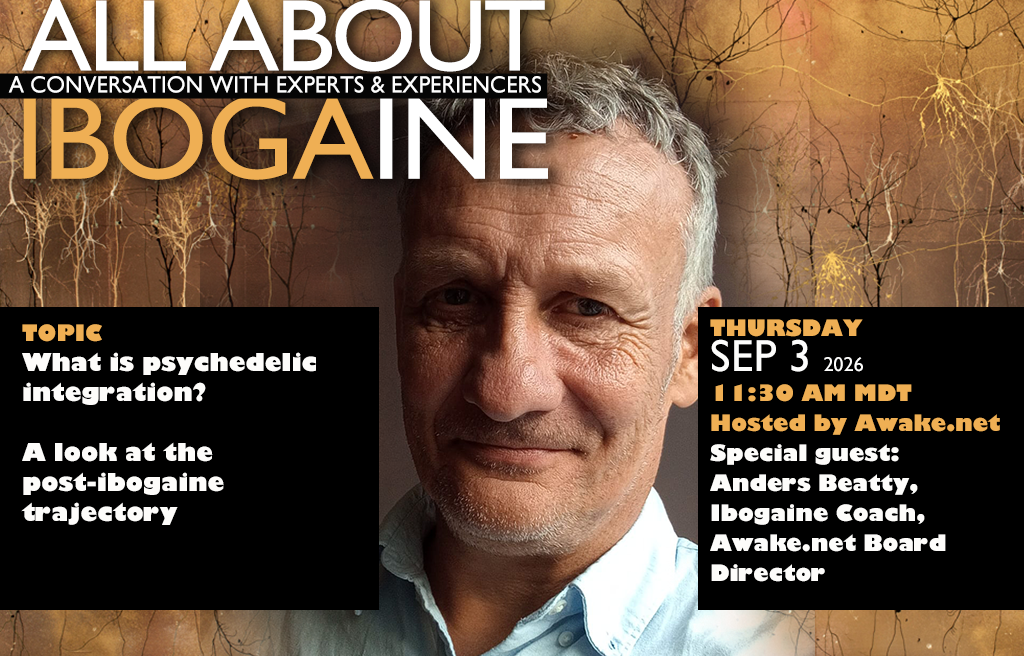
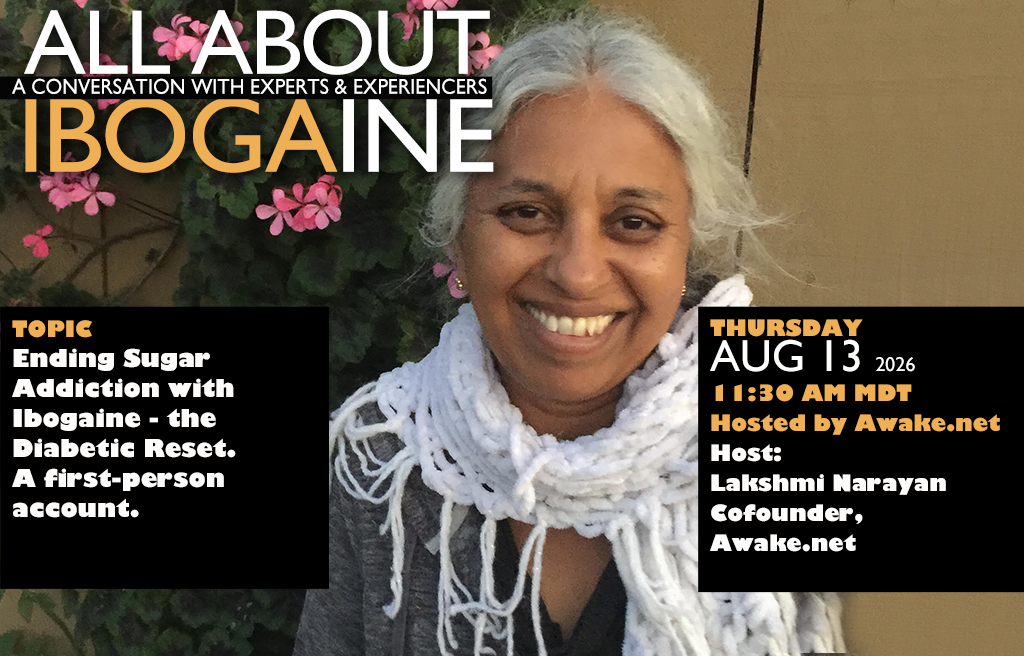
The session was hosted by Lakshmi on behalf of Awake.net as part of the “All About Ibogaine” Thursday conversation series, initiated following a U.S. executive order fast-tracking ibogaine for addiction treatment.
Guest speaker Sarah Salter Kelly, author of Trauma as Medicine, shared her deeply personal journey of healing following the 1995 kidnapping, rape, and murder of her mother, Sheila Salter.
Healing from trauma requires intentionality, self-trust, and a willingness to feel and process difficult emotions rather than avoid them.
Integration after psychedelic experiences (including ibogaine treatment) is the most critical phase — sustainable, simple steps are more effective than impulsive wholesale life changes.
Forgiveness is not a destination but an ongoing practice rooted in the pursuit of personal freedom and liberation.
Psychedelics such as psilocybin and ayahuasca can expand perspective and help individuals access what they have been avoiding, but the real work happens in day-to-day integration.
Collective healing requires individuals to address their own unresolved trauma, as personal reactions and triggers reflect deeper unprocessed grief.
Intuition can be cultivated through body-based practices, meditation, and learning to recognize when the mind overrides the body’s signals.
Discussed Topics
1. Background and Purpose of the “All About Ibogaine” Series
Lakshmi introduced the series as a response to growing public interest in ibogaine following a U.S. executive order fast-tracking it for addiction treatment. The goal is to create an archived resource where experienced practitioners and experiencers can share knowledge with those newly encountering plant medicines.
Details
Lakshmi: The series is part of the Awake Living Library of Mentors and Masters, designed to share hard-won knowledge about ibogaine, iboga, psilocybin, and ayahuasca.
Lakshmi: Plant medicines affect the body, mind, and spirit simultaneously, and healing occurs on all those levels.
Conclusion
The series serves as an educational and archival platform for both new and experienced individuals engaging with psychedelic plant medicines.
2. Sarah Salter Kelly’s Background and Approach to Trauma
Sarah provided context for her perspective, grounding it in lived experience, energy healing, and earth medicine traditions rather than a clinical background.
Details
Sarah: Her approach emerged because conventional resources were unavailable or insufficient; she had to discover healing from within.
Sarah: She has approximately 20 years of ceremonial experience with psilocybin and ayahuasca, and earlier recreational experience with LSD and psilocybin.
Sarah: She cautioned listeners to be aware of potential triggers while she spoke about difficult subject matter.
Conclusion
Sarah’s framework is experiential and spiritual, emphasizing personal agency, body awareness, and connection to the sacred.
3. The Murder of Sheila Salter and Its Immediate Aftermath
Sarah recounted the traumatic events of December 1995, when her mother was attacked, kidnapped, raped, and murdered by a stranger, Peter John Bright Eyes, in Edmonton, Alberta, Canada.
Details
Sarah: Her mother went missing on December 7, 1995, from the parking garage of her workplace. Her body was found 10–11 days later in an abandoned farmhouse.
Sarah: A tip about a ring sold at a bar led police to identify Peter Bright Eyes, who had only been out of prison for approximately 5 days before the murder.
Sarah: Bright Eyes pled not guilty but was convicted of first-degree murder in March 1997 and died by suicide in prison approximately four weeks later.
Sarah: The conviction did not bring the expected closure — the body and nervous system still had to process the trauma regardless of legal outcomes.
Conclusion
External resolution (arrest, trial, conviction) does not automatically resolve internal trauma; the body must still digest the experience independently.
4. The Process of Healing: Intentionality, Self-Trust, and Facing Fear
Sarah described the decade-long process of working through grief and trauma following her mother’s death, emphasizing the role of personal intention and self-reliance.
Details
Sarah: She did not pursue formal therapy initially due to financial constraints and a self-reliant mindset. Her core intention was freedom.
Sarah: She confronted her fears physically — returning to the parking garage, walking alone at night — as part of moving trauma through her body.
Sarah: She made space to feel grief fully, resisting cultural pressure to resolve it within a fixed timeframe (e.g., a Workers’ Compensation Board notification suggesting two months was adequate).
Lakshmi: Intentionality is essential for healing; the purity of an intention to be free creates synchronicity and sustains energy through difficult periods.
Conclusion
Healing requires a clear, sustained intention (freedom), willingness to face fear physically and emotionally, and trust in one’s own capacity to move through difficulty.
5. Addressing Anger and the Nine-Month Ceremony
Approximately ten years after her mother’s death, Sarah recognized she had never addressed her anger toward Peter Bright Eyes. She created her own ceremony to do so.
Details
Sarah: She visited a psychologist who suggested visualizing Bright Eyes surrounded by pink light or in a hot air balloon — approaches she found inadequate.
Sarah: She designed her own weekly ceremony lasting approximately 90 minutes, with no fixed plan other than to be with feelings until they changed — including shouting, meditating, drumming, writing letters, and fire ceremonies.
Sarah: The intention was liberation, not hatred. She wanted to address the contraction she felt in her body.
Sarah: After 3–4 months, an unexpected vision arose in which she felt deep compassion for a young boy who turned out to represent Peter Bright Eyes — an experience that shocked and conflicted her.
Lakshmi: Awareness itself creates distance from unconscious feeling, providing breathing space to be curious rather than reactive.
Conclusion
Unaddressed anger can persist even after years of grief work. Self-designed ceremony, grounded in a clear intention for freedom, can be a powerful vehicle for processing it. Compassion can emerge unexpectedly as a natural result of deep inner work.
6. Forgiveness as Practice, Not Destination
Sarah described how forgiveness of Peter Bright Eyes emerged organically through ceremony and inner work, and how she understands forgiveness more broadly.
Details
Sarah: During a training in the Inca Medicine Wheel in approximately 2006, she created a mandala of life teachers and recognized that the last object represented Peter Bright Eyes — one of her greatest teachers.
Sarah: She spoke forgiveness aloud for the first time in that moment, after sitting with the truth of it and releasing resistance.
Sarah: Forgiveness is not a one-time event but an ongoing practice; she has revisited forgiveness of various people at different life stages.
Sarah: A key indicator that forgiveness work is needed is when she notices she is holding someone else accountable for how she feels inside her own body.
Conclusion
Forgiveness is a practice rooted in the pursuit of freedom, not an endorsement of harmful actions. It must be spoken aloud and claimed as real to be effective.
7. Collective Healing: Connecting with Peter Bright Eyes’ Community
Sarah described how her healing journey extended into collective reconciliation by connecting with the First Nation community of Peter Bright Eyes and eventually his sister, Marilyn.
Details
Sarah: In 2010, following a vision encouraging her to “find the bones of his ancestors and put them together,” she reached out to the Satellite Cree First Nation in Alberta and connected with former chief Eric Large.
Sarah: She also contacted Bright Eyes’ sister, Marilyn, via Facebook, and the two eventually began doing public talks together.
Sarah: Through this work, Sarah gained a deeper understanding of the impact of colonization, residential schools, and intergenerational trauma on Bright Eyes’ life.
Sarah: At a talk held at Blue Quill College (a former residential school), Marilyn acknowledged the devastation her brother had caused Sarah’s family — a moment of unexpected acknowledgment that was deeply healing.
Sarah: She recognized that her own ancestors’ migration to Canada had indirectly impacted Bright Eyes’ ancestors, illustrating how deeply interconnected collective trauma is.
Conclusion
Healing can extend beyond the individual into collective reconciliation. Unexpected acknowledgment from unlikely sources can be profoundly healing. Colonial trauma and personal trauma are deeply intertwined.
8. The Role of Psychedelics (Psilocybin, Ayahuasca) in Trauma Healing
Sarah and Lakshmi discussed how plant medicines support trauma healing by expanding perspective and surfacing what has been avoided.
Details
Sarah: After completing her ceremony with Bright Eyes, she began ceremonial work with ayahuasca in Peru starting in 2008, continuing for approximately 10 years.
Sarah: Ayahuasca and other psychedelics engage the felt sense to reveal what has been avoided and allow the mythos — a larger, more expansive framework — to hold the experience.
Lakshmi: Psychedelics create a shift in perspective, expanding the “box” of perception and enabling compassion for self and others.
Sarah: Psychedelics help individuals gain insight into how to be present with what is already in their bodies; they do not introduce new content but illuminate what is already there.
Sarah: Working with psilocybin supports nervous system regulation and helps individuals distinguish between reaction (rooted in old wounds) and response (conscious choice).
Conclusion
Psychedelics are tools for expanding perspective and accessing the felt sense, not substitutes for the ongoing inner work of integration.
9. Integration After Psychedelic Experiences
Both speakers emphasized that integration is the most important and often most neglected phase of psychedelic work.
Details
Sarah: Integration requires creating “banks for the river” — structures and resources that give direction to the flow of insight from ceremony.
Sarah: Post-ceremony fervor to change everything at once is itself an addictive pattern that often leads to collapse; simplicity and sustainability are key.
Lakshmi: A common post-journey experience is dissatisfaction with one’s current self compared to the potential glimpsed during the journey — this gap is the arc of transformation.
Sarah: The ecstatic states of psychedelic experience reflect the truth of our being outside physical form; integration means caring for the dense, heavy aspects of physical life without bypassing them.
Sarah: Healing from addiction via ibogaine is only the first step; accumulated conditioning, habits, family dynamics, and triggers must be addressed through ongoing integration work.
Conclusion
Sustainable integration requires simple, consistent practices, community support, and willingness to be with discomfort rather than chasing the next peak experience.
10. Cultivating Intuition and Body Awareness
Sarah offered practical guidance on developing intuition as a foundation for healing and self-trust.
Details
Sarah: All humans receive intuitive impulses constantly, but most learn to override them from an early age.
Sarah: A foundational practice is developing a clear yes/no awareness in the body, particularly in the belly — free meditations are available on her YouTube channel.
Sarah: Expanding awareness of the energy body (front, back, sides, above, below) makes it easier to receive intuitive signals.
Sarah: Recognizing patterns of self-betrayal — moments when the body’s signal was overridden by the mind — is essential to rebuilding intuitive trust.
Lakshmi: A simple technique for shifting energy during difficult moments (in psychedelic journeys or daily life) is to change the physical state — stand up, go outside, take a shower.
Sarah: Changing routine is integral to addressing trauma, as it provides a different vantage point and breaks habitual reactive patterns.
Conclusion
Intuition is cultivated through consistent body-based practice, recognition of self-betrayal patterns, and willingness to follow through on what the body communicates.
11. Trauma as Catalyst for Growth and Service
Lakshmi and Sarah reflected on the broader meaning of trauma within a life journey.
Details
Lakshmi: Trauma can be understood as a lever or catalyst for growth, maturation, and eventual service to others.
Sarah: She would not change any aspect of her journey, including her mother’s death, as she believes it is precisely what she came here to learn.
Sarah: Her brother’s death from a fentanyl overdose 18 months prior represented new trauma, illustrating that life continues to present challenges regardless of prior healing work.
Sarah: The Daoist concept “heavy is the root of light” (referenced by Lakshmi) captures the value of honoring grief and difficulty as essential to growth.
Sarah: Western culture’s goal of perpetual happiness is a false framework; being with what is heavy is a real and necessary part of human experience.
Conclusion
Trauma, when metabolized consciously, becomes medicine — not a fixed thing to acquire, but a deepening of one’s capacity to be present, compassionate, and of service.
12. Collective and Global Dimensions of Trauma Healing
The conversation broadened to address how individual healing connects to collective and planetary healing.
Details
Sarah: Unaddressed personal trauma erupts through reactions in daily life and contributes to collective dysfunction — righteousness, judgment, superiority, and conflict.
Sarah: Addressing war and conflict with the same reactive strategies produces the same results; a pause before reaction, even when aggression is ongoing, is necessary for different outcomes.
Lakshmi: The fractal hologram model — that shifting oneself shifts the whole — offers a framework for understanding how personal healing contributes to collective change.
Sarah: She imagines humanity as having the collective awareness of 13–14-year-olds, and finds it helpful to approach collective challenges with the benevolence of a wise parental figure.
Lakshmi: The Bhagavad Gita acknowledges that conflict is inherent to human experience given varying levels of evolution; reconciling this reality is part of the work.
Conclusion
Individual healing is inseparable from collective healing. Taking responsibility for one’s own reactions and triggers is a direct contribution to planetary balance.
13. Sarah Salter Kelly’s Current Work and Offerings
Sarah described her professional practice, upcoming retreats, and training programs.
Details
Sarah: Her website is sarahsalterkelly.com; her book Trauma as Medicine is available there and through Amazon, Indigo, or Ingram Sparks.
Sarah: She offers retreats of 5 days or more at a retreat center in Western Canada, approximately 4 hours north of Washington State, incorporating psilocybin, Wachuma, hapé, and microdose ceremonies.
Sarah: Upcoming retreats: July 22–27 (Wachuma, a couple of spots remaining) and end of September (psilocybin ceremonies).
Sarah: She offers a 10-day in-person training in September for those called to earth medicine, covering cycle teachings, soul retrieval, and shamanic journey, with the remainder online throughout the year.
Sarah: A ceremonial medicine program for those interested in supporting others with psilocybin (one-on-one and group) will begin in approximately one year.
Lakshmi: Sarah is part of the Awake Mentors and Masters program and will appear in the Breakthrough Lectures within the 9-month integration program, Change Your Character, launching soon.
Conclusion
Sarah’s offerings span retreats, individual healing practice, and training programs, all grounded in energy medicine, earth traditions, and ceremonial work with plant medicines.
Challenges
Integration support gaps: Many individuals emerging from ibogaine or other psychedelic treatments lack adequate integration resources, leaving them without the “banks of the river” needed to sustain and direct their healing.
Cultural resistance to grief: Western culture does not provide adequate space or validation for grief and trauma processing, often imposing arbitrary timelines (e.g., two months for bereavement) that are insufficient.
Forgiving an ongoing aggressor: The question of how to practice forgiveness when someone is still causing harm was raised but acknowledged as having no universal answer — it requires individual discernment and ongoing inner work.
Psychedelics and pre-existing mental health conditions: Sarah noted that her brother’s combination of prescribed medications (Ritalin, antidepressants) and psychedelic substances from a young age, without a stable sense of self, contributed to lifelong mental health and addiction challenges — highlighting the need for careful screening and support.
Bypassing vs. genuine integration: There is a risk that individuals use spiritual or psychedelic frameworks to bypass rather than genuinely process difficult emotions, particularly when seeking only peak or ecstatic states.
ADD TOGGLE HERE
Sarah Salter-Kelly is a shamanic teacher, ceremonialist, medicine woman, and author of Trauma as Medicine, devoted to the remembrance of our true nature. Her work serves the re-alignment of the human soul with Source, restoring the lived knowing of our non-duality and our belonging within the great web of life.
She offers grounded spiritual leadership for meeting suffering as sacred initiation—guiding the alchemy through which pain is metabolized, wisdom is revealed, and full responsibility for one’s life is reclaimed. Her teachings do not bypass the human experience, but invite us into intimate presence with it, where truth can be embodied and soul fragments return home.
Her wisdom has been forged through fire. Born of the long arc of integrating the violent loss of her mother and the radical act of forgiveness that followed, her path is shaped by more than 35 years of devotion to personal transformation, energy medicine, shamanism, psychedelic initiation, and earth-based spiritual lineages. What she carries has been lived, prayed, and earned.
With over two decades of experience guiding workshops, retreats, and initiatory trainings, Sarah now works primarily with Grandmother Psilocybin in sacred group ceremony. Through prayer, song, and communion, she holds spaces where the veils thin, the heart remembers, and participants are invited to return to the truth of who they are—children of Source, walking the earth in sacred reciprocity.
Sarah offers private sessions to support the integration and lived application of plant spirit healing and soul work. These sessions are available to those who have previously participated in her trainings or retreats and are seeking continued guidance as they weave their ceremonial experiences into daily life. www.sarahsalterkelly.com
Recommend0 recommendationsPublished in All About Ibogaine, EVENTS, Lakshmi Narayan, Psilocybin


Subscribe to Awake Events & Posts