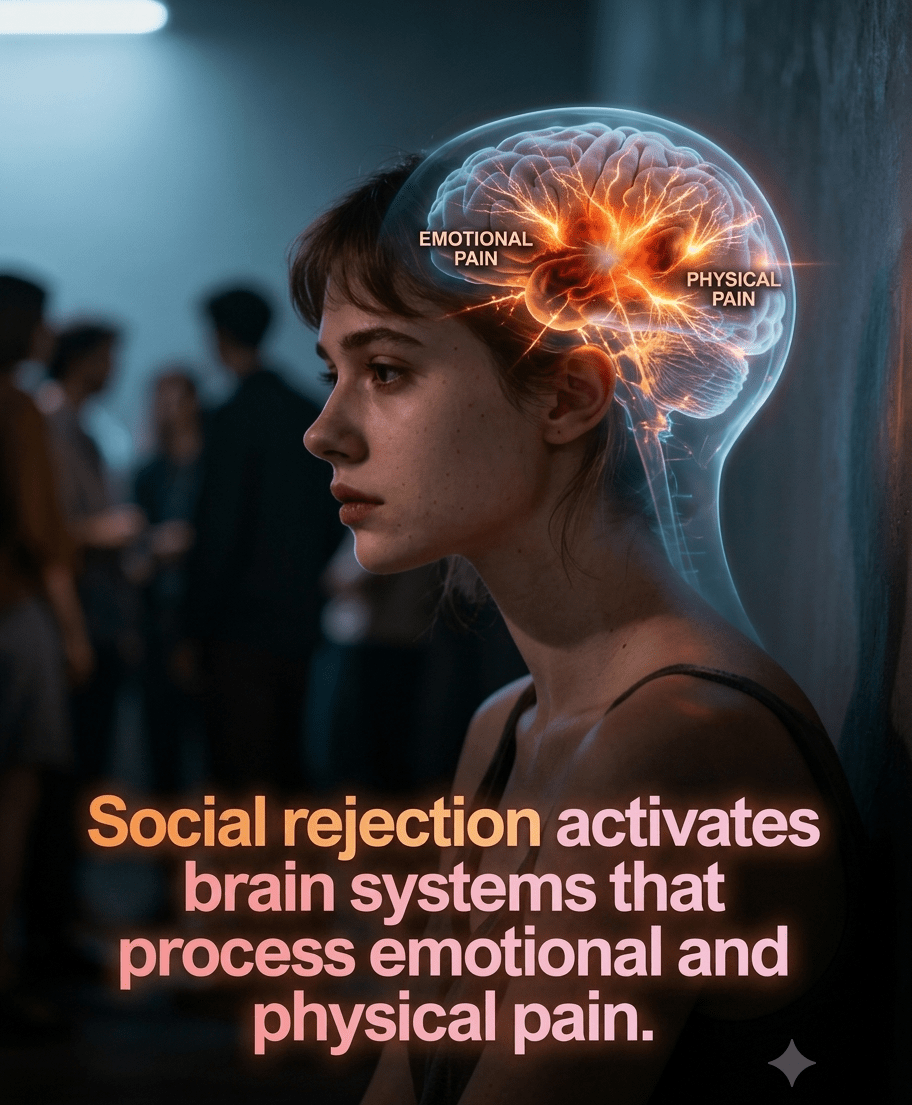
Why Social Rejection Hurts Quite Badly

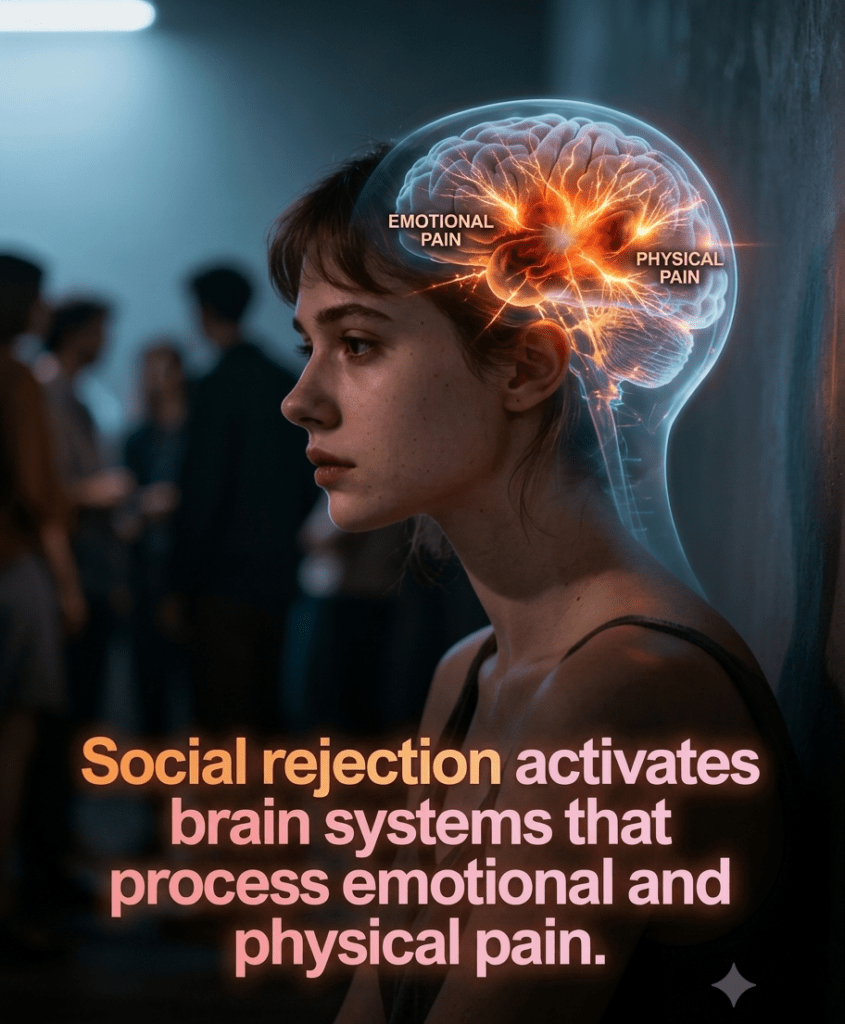
When someone is rejected or excluded, the experience doesn’t just feel bad emotionally, it triggers real brain-level responses designed to protect you.
From an evolutionary perspective, being part of a social group was critical for survival, so the brain treats social rejection as a form of danger to warn you and help you adapt. That’s why people often describe rejection using words like “hurt” or “pain,” and some brain areas involved in physical pain also light up during social exclusion. These neural responses help your mind notice that a social bond is threatened and adjust future decisions about who to trust and get close to.
Studies on brain activity during social feedback show that different patterns emerge when people experience acceptance versus rejection.
Acceptance activates brain regions linked to reward and positive connection, while rejection engages circuits tied to evaluating social value and avoiding harm. Over time, these neural patterns guide how you interpret social situations and decide whom to approach or avoid. Learning from rejection helps your brain refine social expectations and behaviour.
Beyond emotional pain, repeated rejection can raise stress hormone levels, weaken the sense of belonging, and even affect long-term mental health if it continues over time.
Knowing how the brain responds to rejection can help people and clinicians better support coping and social learning.
#mentalhealth #emotions
Recommend0 recommendationsPublished in Kelechi Obasi


Subscribe to Awake Events & Posts