Why Your Identity is Your Strongest Addiction

Most people think addiction is about substances.
Alcohol.
Drugs.
Sugar.
Social media.
But one of the strongest addictions a human being can develop is an addiction to their identity.
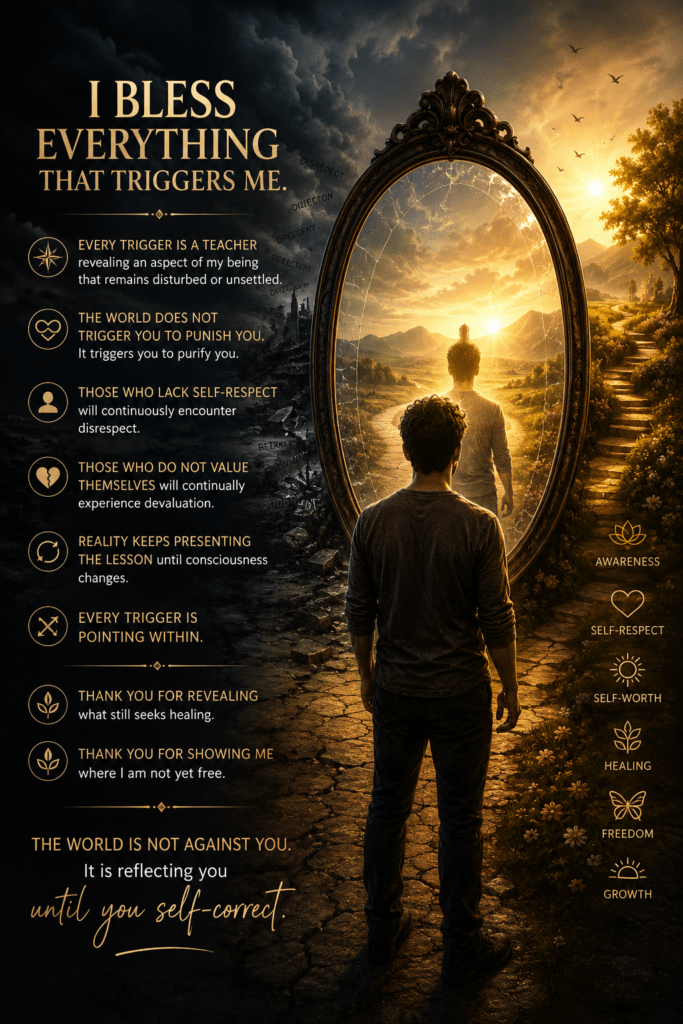
The story of who they believe they are.
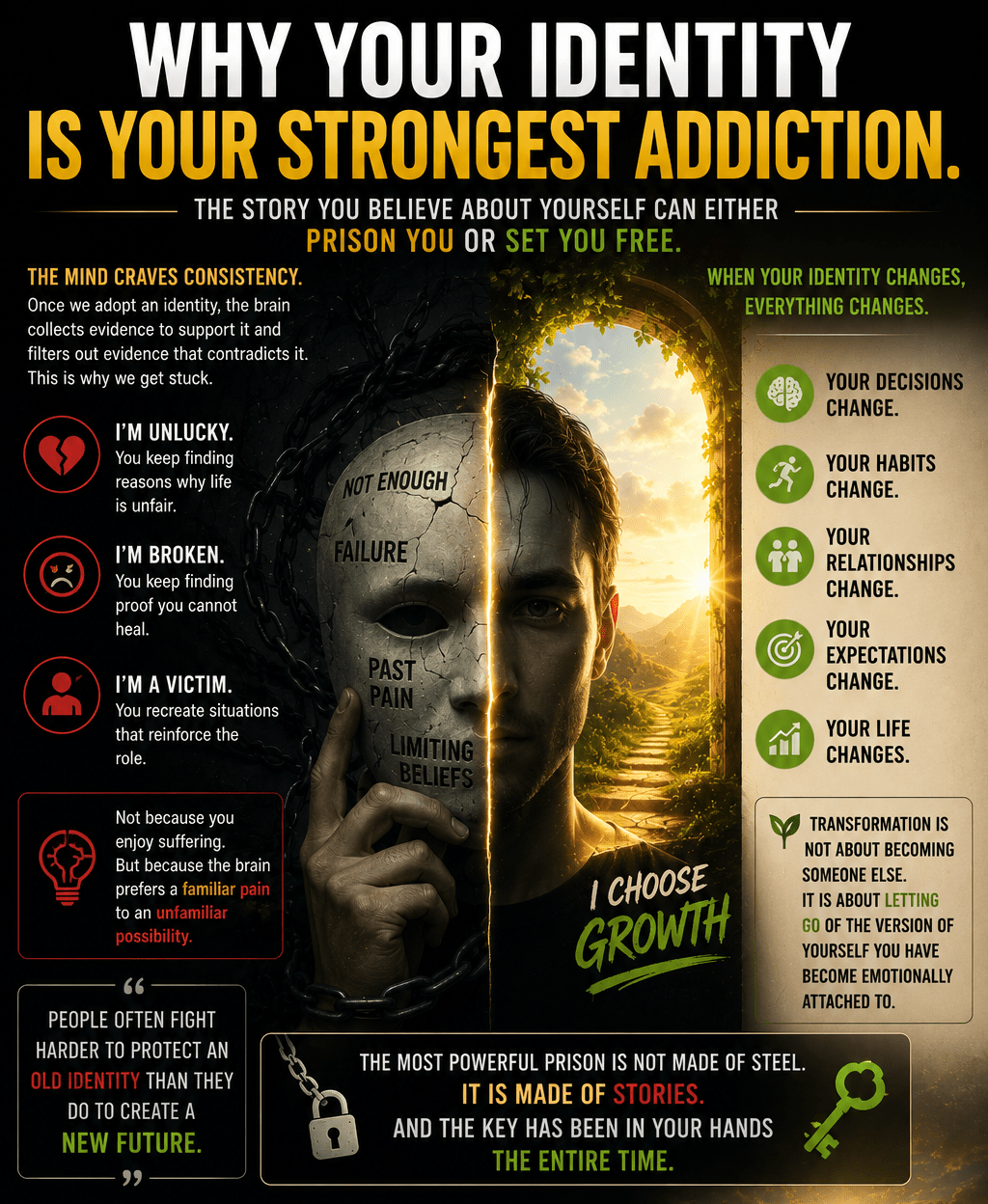
The mind craves consistency. Once we adopt an identity, the brain begins collecting evidence to support it and filtering out evidence that contradicts it. This is why some people remain trapped in the same patterns for years.
The person who believes they are unlucky keeps finding reasons why life is unfair.
The person who believes they are broken keeps finding proof they cannot heal.
The person who believes they are a victim keeps unconsciously recreating situations that reinforce the role.
Not because they enjoy suffering.
But because the brain prefers a familiar pain to an unfamiliar possibility.
This is one of the great paradoxes of human psychology:
People often fight harder to protect an old identity than they do to create a new future.
The moment your identity changes, your decisions change.
Your habits change.
Your relationships change.
Your expectations change.
And eventually, your life changes.
Perhaps transformation is not about becoming someone else.
Perhaps it is about letting go of the version of yourself you have become emotionally attached to.
Because the most powerful prison is not made of steel.
It is made of stories.
And the key has been in your hands the entire time.
Reference:
Research in psychology suggests that identity plays a central role in behavior, motivation, habit formation, and self-perception. Studies on self-concept, cognitive consistency, and identity-based habits indicate that people often behave in ways that reinforce their existing sense of self, even when those patterns are limiting.
Recommend0 recommendationsPublished in Kelechi Obasi


Subscribe to Awake Events & Posts