
Baka pygmy iboga traditions with special guest Dr. Tracy Scott, All about ibogaine, Aug 6

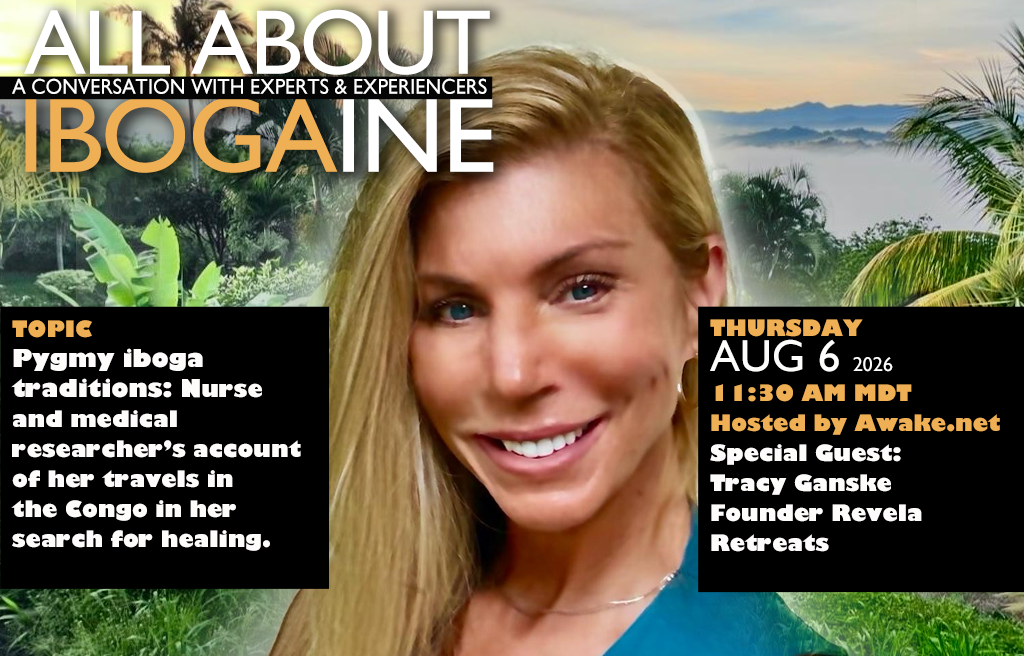
Replay of a deep dive into the world of Dr. Tracy Ganske a PhD researcher, nutrigenomics expert, and the founder of Revela Retreats, where she specializes in merging scientific rigor with ancient plant medicine traditions. Transitioning from a root-cause background in functional medicine, she utilizes clinical biology to stabilize and test clients’ biological markers—such as neurotransmitters and gut biome health—before guiding them through personal transformations. Having traveled to over 90 countries, she has deeply immersed herself with West Africa’s Pygmy populations to learn the sacred traditions of Iboga medicine. Today, at Revela Retreats, she leverages her unique blend of medical school knowledge and indigenous initiations to offer highly tailored, medically grounded, and safe Iboga healing ceremonies for a maximum of three participants at a time.
Thursday Aug 6, 2026, 11:30 am – 1:30 pm MDT
Key Takeaways
- Dr. Tracy Scott, an RN and PhD in Nutritional Sciences, shared her personal healing journey from Lyme disease through functional medicine, ayahuasca, and ultimately iboga/ibogaine.
- Dr. Tracy was guided through waking visions to travel to the Congo and meet a Baka high priestess named Antoinette, who conferred upon her a rare Malumbi power — the first time it had been given outside the tradition.
- She has been initiated into three African lineages: Dasumba/Alambo (Gabon), Baka (Congo), and Fang Bwiti (Cameroon), each with distinct ceremonial practices.
- The gut-brain axis and microbiome health are central to Dr. Tracy’s clinical approach, which she integrates with iboga full root bark ceremonies and psycho-spiritual work.
- Her retreat model (Revela Retreats) combines medical screening, neurotransmitter and gut biome testing, iboga ceremony, somatic therapy, Reiki, and clinical psychology for integration.
- Reciprocity with African indigenous communities is considered ethically important but currently relies on individual initiative rather than formal structures outside of Gabon.
- Awake.net is building a community platform with mentors, masters, scholarship funding, and aftercare programming to support people seeking ibogaine and other plant medicine journeys.
Discussed Topics
Dr. Tracy Scott’s Background and Origin Story
- Details
- Dr. Tracy: Trained as an RN, then became a nurse anesthetist before realizing it was not her calling; transitioned into biotech sales and marketing.
- Dr. Tracy: Pursued a PhD in Nutritional Sciences with a focus on gut biome and the gut-brain axis, ahead of mainstream awareness of the topic.
- Dr. Tracy: Developed chronic illness from Lyme disease, was misdiagnosed repeatedly, and began researching functional medicine independently.
- Dr. Tracy: Opened functional medicine clinics in Austin, Texas, eventually growing to six clinics with a full medical staff.
- Dr. Tracy: Met a woman on a plane who introduced her to ayahuasca; after 18 months of research and hesitation, she attended her first ceremony in Miami.
- Dr. Tracy: Her first ayahuasca experience surfaced childhood trauma and revealed the psychosomatic roots of her physical symptoms.
- Conclusion
- Dr. Tracy’s path to plant medicine was driven by personal illness, professional dissatisfaction with symptom-only treatment, and a chance encounter that opened her to psychedelic healing.
- The ayahuasca experience marked a clear before-and-after shift in her health and life direction.
Transition from Ayahuasca to Iboga and the Journey to Africa
- Details
- Dr. Tracy: After four or five ayahuasca ceremonies, the plant communicated clearly that her medicine was in Africa.
- Dr. Tracy: As a child, she had always felt a deep connection to Africa, telling her mother she had been there before.
- Dr. Tracy: Traveled to Gabon and was initiated into the Dasumba/Alambo tradition by a female healer in the southern part of the country.
- Dr. Tracy: During initiation, she demonstrated an ability to diagnose villagers’ ailments and prescribe forest plant remedies — a gift recognized and tested by the initiating healer.
- Conclusion
- The ayahuasca plant directed Dr. Tracy toward iboga, which she experienced as a fulfillment of a lifelong spiritual pull toward Africa.
- Her clairvoyant diagnostic abilities were recognized and validated within the Gabonese tradition.
The Congo Journey and Meeting Antoinette
- Details
- Dr. Tracy: Over the course of a year, a small African woman appeared in waking visions, providing specific travel coordinates and directions to a village in the Congo.
- Dr. Tracy: Hired a Cameroonian French journalist named Frank as a fixer; together they identified the woman as a well-known high priestess named Antoinette.
- Dr. Tracy: The journey involved flying into Uganda, a multi-day drive with repeated vehicle breakdowns, crossing a border, and a seven-hour hike including swimming across a river — all details pre-shown in the visions.
- Dr. Tracy: Upon arrival, Antoinette said, “The ancestors told me you would be coming,” and conducted a half-day Malumbi power ceremony — the first time this power had been given outside the Baka tradition.
- Dr. Tracy: She remains telepathically connected to Antoinette; approximately 18 months prior, she sensed something was wrong and, through Frank and Antoinette’s son, discovered Antoinette was in danger during childbirth with malaria, and provided financial assistance for hospital care.
- Lakshmi: Noted the story raises profound questions about the nature of reality and the telepathic properties attributed to plant medicines.
- Conclusion
- The Congo journey confirmed the reality of plant-mediated telepathic communication and cross-cultural spiritual connection.
- The Malumbi power ceremony enhanced Dr. Tracy’s capabilities as a facilitator in a way she describes as a different quality of perception rather than simply greater power.
African Lineages: Dasumba, Baka, and Fang Bwiti
- Details
- Dr. Tracy: Dasumba (Gabon) is considered the original Bwiti; the Alambo sub-lineage focuses on healing. Ceremonies begin in the daytime.
- Dr. Tracy: The Baka (forest-dwelling people of the Congo Basin) are generalist ethnobotanists who know every forest plant for every condition; they are considered the original discoverers of iboga, which they later shared with the Bantu people who developed Bwiti.
- Dr. Tracy: Fang Bwiti (Cameroon) incorporates Christian elements due to early missionary contact; ceremonies center on light, use flood lamps powered by generators, and begin in a temple setting. Masoko ceremonies are held at night.
- Dr. Tracy: The Fang initiation was the most physically and psychologically demanding she had experienced, involving smoke baths, unpredictable scheduling, and extended high-dose medicine work.
- Dr. Tracy: The deliberate unpredictability of African initiations serves to disrupt habitual Western patterns of control and scheduling, functioning as a pre-medicine rewiring process.
- Lakshmi: Noted that scrambling habitual patterns destabilizes the ego, which facilitates deeper transformation.
- Conclusion
- Each lineage has distinct ceremonial structures, timing, and cultural contexts, but all share the use of iboga and a focus on deep healing and initiation.
- The Baka are recognized as the original custodians of iboga knowledge.
The Role of Music in Ceremony
- Details
- Dr. Tracy: Polyphonic tones used in African ceremonies were the most stabilizing element during her initiations; focusing on the music and her living prayer helped her endure the most difficult moments.
- Lakshmi: Described music as raising frequency.
- Conclusion
- Live ceremonial music is considered an essential therapeutic and stabilizing component of iboga work.
Benefits of Indigenous Ceremony for Western Practitioners
- Details
- Dr. Tracy: Strongly affirmed the value, stating that the psycho-spiritual dimension of full root bark ceremony provides a holistic integration that isolated ibogaine HCL does not.
- Dr. Tracy: Clients who have previously received ibogaine HCL elsewhere often describe the full root experience as pulling everything together in a way the HCL alone did not.
- Dr. Tracy: Trauma is the root of both addiction and many physical conditions; the psycho-spiritual ceremony, supported by ancestral presence, addresses trauma at its source.
- Conclusion
- Full root bark ceremony in a traditional context is considered essential for complete healing, particularly for trauma and addiction.
- The psycho-spiritual dimension is what distinguishes transformative healing from symptomatic relief.
Biology of Trauma, Addiction, and the Gut-Brain Axis
- Details
- Dr. Tracy: Western diet, soil depletion, and agricultural chemicals have severely damaged the gut microbiome, reducing production of neurotransmitters such as serotonin, dopamine, and GABA.
- Dr. Tracy: This dysbiosis drives the need for SSRIs, anti-anxiety medications, and sleep aids; addressing the gut is foundational to mental health.
- Dr. Tracy: She is completing a book on the biology of addiction and trauma, centered on the microbiome.
- Lakshmi: Observed that unresolved emotional trauma also appears to be stored in the gut and released through medicine work.
- Dr. Tracy: Agreed, noting that the full root bark contains many alkaloids beyond ibogaine that address neuroinflammation, gut inflammation, and anti-infective properties — an entourage effect analogous to baking a cake with multiple ingredients.
- Lakshmi: Noted that ibogaine can be patented as an isolated molecule, but the whole plant cannot, which drives pharmaceutical interest in extraction over whole-plant use.
- Conclusion
- Gut microbiome health is inseparable from mental and emotional health; whole root bark addresses both biological and psycho-spiritual dimensions simultaneously.
- The entourage effect of full root bark is considered superior to isolated ibogaine HCL for comprehensive healing.
Dr. Tracy’s Current Practice: Ravella Retreats
- Details
- Dr. Tracy: Works with small groups of one to three clients at a time to provide individualized care.
- Dr. Tracy: All clients undergo gut biome stool testing and neurotransmitter urine testing prior to arrival; results inform a personalized protocol.
- Dr. Tracy: Neurotransmitter testing helps manage pharmaceutical tapers (SSRIs and other medications must be discontinued before ceremony) and supports the post-ceremony golden window of elevated serotonin and dopamine.
- Dr. Tracy: Her team includes a clinical psychologist (for pre-screening and post-journey integration), a somatic therapist, and a Reiki therapist who also performs grid work on the property before and after each client group.
- Dr. Tracy: Clients may return for micro tune-up sessions with smaller doses of iboga to address specific issues.
- Dr. Tracy: Microdosing protocols are provided to some clients post-retreat based on readiness.
- Dr. Tracy: Is developing an addiction treatment center in Costa Rica to offer a full continuum: ibogaine HCL detox, full root bark ceremony, and extended integration on land.
- Dr. Tracy: Retreat website is RavellaRetreats.com.
- Conclusion
- Ravella Retreats operates at the intersection of science and spirit, combining rigorous medical screening with ceremonial iboga work and multi-disciplinary integration support.
- The planned addiction treatment center will expand capacity for a full detox-to-integration continuum.
Medical Safety Protocols for Iboga Treatment
- Details
- Dr. Tracy: Requires a 12-lead EKG for all clients; a medical director reviews results and may order echocardiograms if indicated.
- Dr. Tracy: Liver enzyme testing is conducted for clients with a history of alcoholism or relevant medical history.
- Dr. Tracy: A urine toxicology screen is administered before ceremony; clients testing positive (e.g., for Adderall) may be refused treatment.
- Dr. Tracy: All SSRIs and relevant pharmaceuticals must be tapered before arrival.
- Dr. Tracy: A clinical psychologist with ibogaine experience conducts full psychological evaluations; borderline personality disorder and active psychosis are contraindications.
- Dr. Tracy: Full root bark is noted to have a less abrupt onset than ibogaine HCL, which is a relevant safety consideration.
- Conclusion
- Comprehensive medical and psychological screening is essential and non-negotiable; Dr. Tracy’s medical licensure and background drive a high standard of pre-treatment evaluation.
Case Study: Client with Undisclosed Borderline Personality Disorder
- Details
- Dr. Tracy: A young female client with GHB addiction did not disclose a diagnosis of borderline personality disorder (BPD); this was discovered only after she experienced a psychotic break between the detox and iboga ceremony phases.
- Dr. Tracy: Dr. Tracy managed the crisis, administered emergency Klonopin, and flew with the client to Inscape aftercare facility in Mexico, where Dr. Carlos Avalar received her.
- Dr. Tracy: The client was highly unstable on arrival but stabilized over time; she required individual rather than group treatment.
- Dr. Tracy: Three years later, the client has returned to university for a clinical psychology degree and is performing in a ballet troupe.
- Dr. Tracy: Attributed part of the positive outcome to the therapeutic relationship and the nurturing, mother-figure role she played for a client who had experienced maternal abandonment.
- Conclusion
- Even thorough screening cannot guarantee full disclosure; facilitators must be prepared to manage psychiatric emergencies.
- Relational safety and consistent care can be as therapeutically significant as the medicine itself.
Black Magic, Witchcraft, and the Ethics of Power
- Details
- Dr. Tracy: In Cameroon, Fang Bwiti practice is somewhat underground; the general population associates it with witchcraft or black magic.
- Lakshmi: Drew a parallel to similar stigma around curanderos in Mexico.
- Lakshmi: Framed the issue as one of power — psychedelics open access to clarity and energy, and the ethical dimension lies in how that power is used.
- Dr. Tracy: Has encountered these questions on conservative Christian podcasts; consistently returns to the principle of intention as the determining factor.
- Dr. Tracy: Has personally witnessed what she considers black magic but chooses not to give it power or energy, anchoring instead in a higher power and protective prayer.
- Dr. Tracy: A Reiki therapist performs grid work on the Ravella Retreats property before and after each client group as a protective measure.
- Conclusion
- The ethical use of plant medicine power is determined by intention, set, and setting.
- Spiritual protection practices are considered a professional responsibility for facilitators working in this space.
Reciprocity and the Nagoya Protocol
- Details
- Dr. Tracy: Gabon is the only country that formally recognizes iboga as a sacrament and has instituted reciprocity frameworks; Cameroon and the Congo do not have equivalent structures.
- Dr. Tracy: Personally committed to purchasing iboga from vetted farms and supporting community development in Africa.
- Dr. Tracy: Brings small groups of Westerners to Africa to learn directly from indigenous practitioners, which provides both knowledge transfer and financial reciprocity.
- Dr. Tracy: Has vetted specific providers in Cameroon, Gabon, and the Congo for group visits.
- Lakshmi: Noted that outside of Gabon, reciprocity is currently a matter of individual choice with no formal pathway or social pressure.
- Conclusion
- Reciprocity with indigenous iboga communities is ethically important but structurally underdeveloped outside of Gabon.
- Individual practitioners bear the responsibility of creating and maintaining reciprocal relationships.
Awake.net Platform and Resources
- Details
- Lakshmi: Awake.net was launched following Trump’s executive order fast-tracking ibogaine for PTSD, to provide reliable information for a new wave of people discovering plant medicines.
- Lakshmi: The platform features a community of mentors and masters with a decade or more of experience, including Dr. Tracy.
- Lakshmi: A Rebirth Scholarship Fund is being developed to support people seeking ibogaine, ayahuasca, or psilocybin journeys for addiction or trauma.
- Lakshmi: A one-week aftercare program and a nine-month online integration community are in development.
- Lakshmi: Directed veteran participant Brendan to Mission Within as an additional resource for veterans seeking plant medicine treatment.
- Lakshmi: Recording of this session will be available at awake.net/ibogaine within one week.
- Conclusion
- Awake.net is positioning itself as a comprehensive ecosystem for plant medicine education, community, scholarship access, and integration support.
- Dr. Tracy is an integral part of the Awake.net mentor and master community.
Audience Q&A
- Details
- BRENDAN (disabled retired veteran): Asked how to educate himself about ibogaine for PTSD and how to become an advocate; directed to Awake.net, the Rebirth Scholarship Fund, and Mission Within.
- Rachel in PA: Shared a complex personal history including PTSD, traumatic brain injury, cervicogenic headaches, and prior deselection from ibogaine due to emotional dysregulation; asked about retreat costs and how to contact Dr. Tracy. Dr. Tracy noted availability of private, semi-private, women-only, veteran-specific, and therapist-specific group options at RavellaRetreats.com.
- Boaz (described as an ibogaine OG with connections to Howard Lassoff, Bob Sisco, and Norm): Asked about the feasibility of bringing African practitioners to modern facilities with cardiac monitoring. Dr. Tracy confirmed she has done this, noting visa challenges; described a successful arrangement in Zanzibar/Tanzania. Advised newcomers to experience iboga in a comfortable Western setting before considering African initiation.
- Jennifer (home health nurse and licensed psilocybin facilitator in Oregon): Asked about the specific neurotransmitter and gut biome tests used. Dr. Tracy described a dry-spot urine test for neurotransmitters and a two-day stool collection test, both from a lab based in Austin, Texas; also noted diurnal adrenal testing.
- Conclusion
- Audience members represented a range of backgrounds including veterans, chronic illness patients, and healthcare professionals, reflecting broad interest in ibogaine across populations.
- Dr. Tracy and Lakshmi provided specific resources and referrals appropriate to each participant’s situation.
Challenges
- Visa and logistical barriers make it difficult to bring African indigenous practitioners to Western or Latin American retreat settings for collaborative ceremonies.
- Reciprocity frameworks for iboga-source communities outside of Gabon are informal and rely entirely on individual practitioner initiative.
- Clients do not always fully disclose psychiatric diagnoses (e.g., borderline personality disorder), creating safety risks that even thorough screening cannot fully eliminate.
- Virtual integration support post-retreat is considered insufficient for many clients; in-person extended integration programming is needed but not yet widely available.
- The Fang Bwiti tradition in Cameroon operates in a semi-underground manner due to cultural stigma associating it with witchcraft, limiting open knowledge exchange.
- Managing pharmaceutical tapers (SSRIs, stimulants) prior to iboga ceremony remains a complex clinical challenge requiring individualized protocols.
Recommended1 recommendationPublished in All About Ibogaine



Subscribe to Awake Events & Posts
Responses